Setting the Mosquito Trap
For the DELTA project, students will receive a kit with 1 black plastic cup called an ovitrap, 5 sheets of seed paper, and 5 small plastic bags.
Each paper is labeled on the left side with a 2 letter (TU for Tulane, WI for the Willow School) and 2 digit (01 to 45) ID Code. On the right side, weeks are labeled 1-5 (Wk1-Wk5).
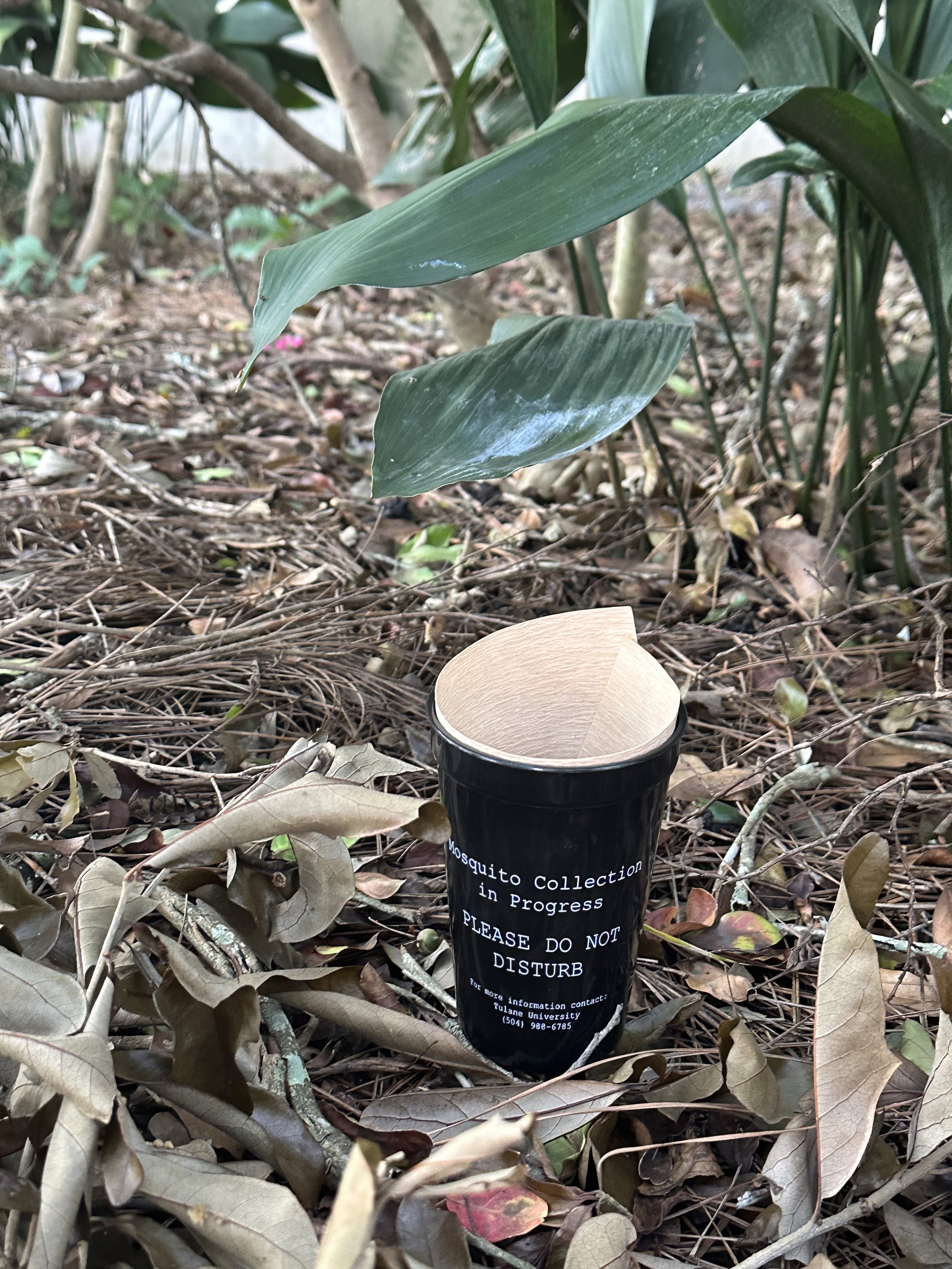
The trap is set by selecting the paper for the collection week, rolling it into a cylinder and placing it inside the cup/ovitrap.
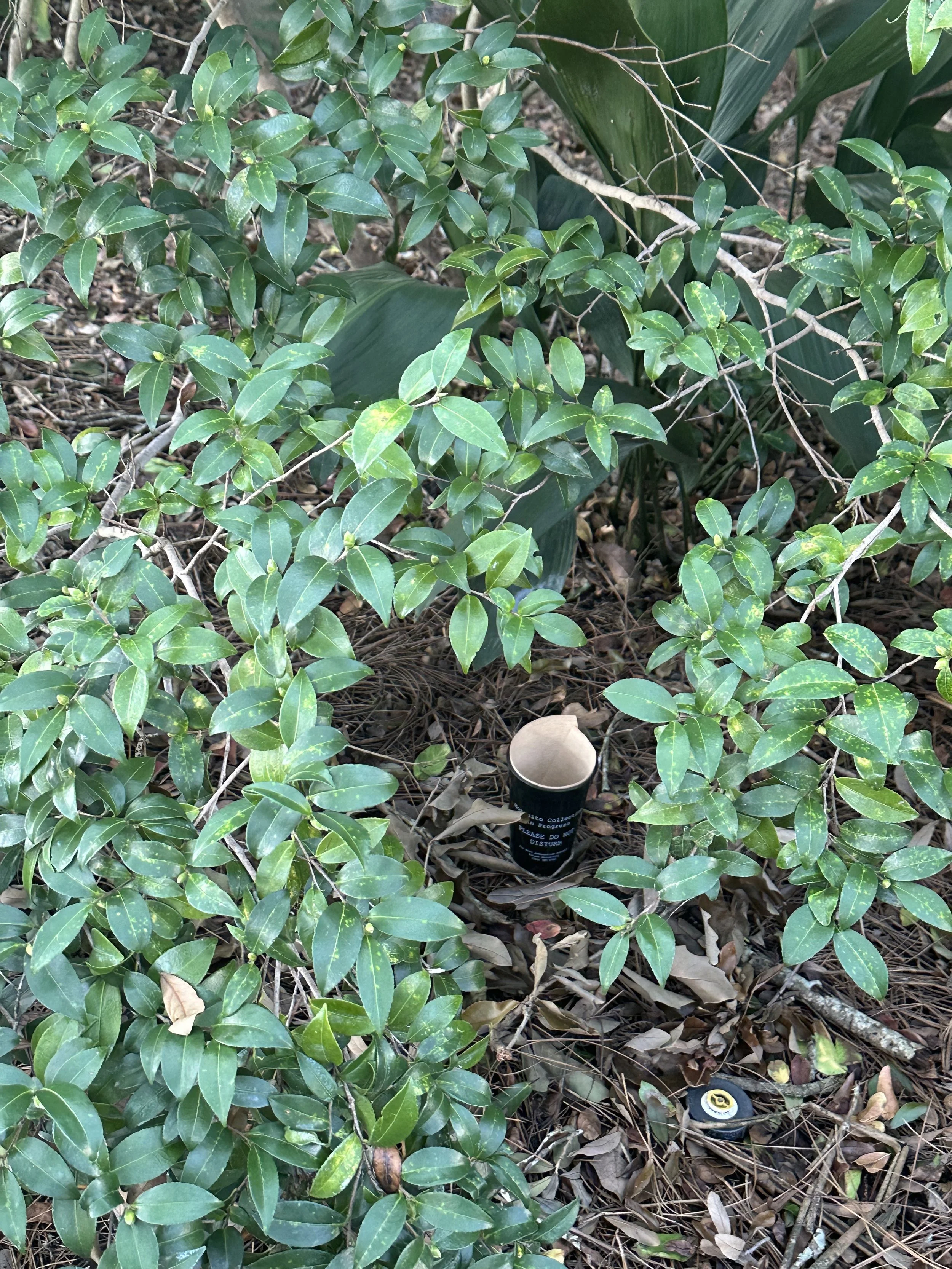
The ovitrap should then be filled halfway with clean tap water and placed in a location on the ground, out of direct sunlight and preferably under or close to vegetation. This can be near in a yard near the home or in park, just be sure to place the trap where it is unlikely to be disturbed or tipped over.
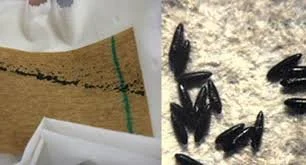
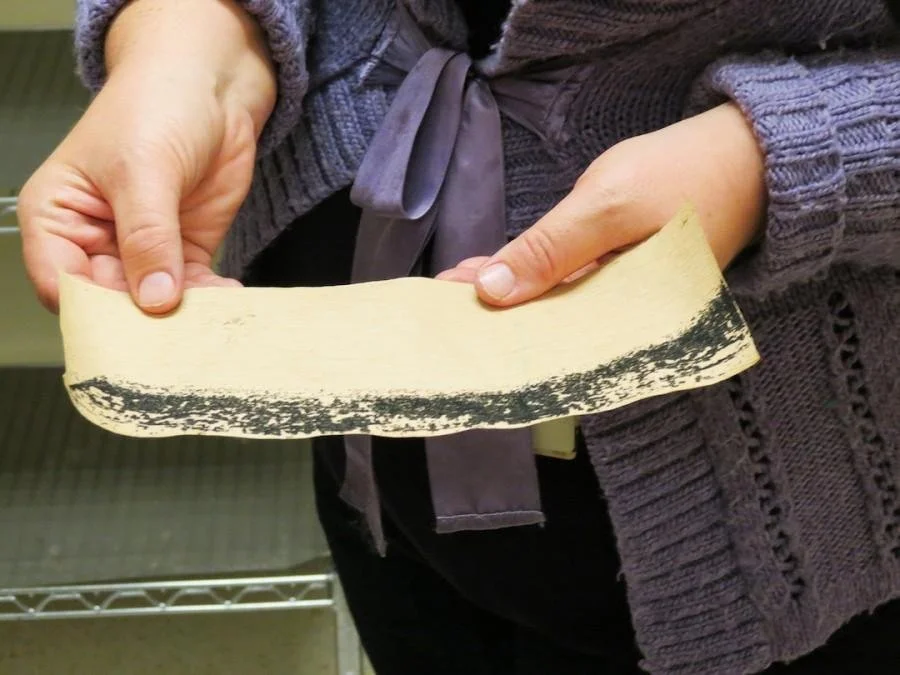
Each Wednesday, reset the ovitrap. Dump out the water and change the paper using the one labeled for the following week and adding more clean water into the trap. The trap can stay in the same location throughout the study. However, if there are no eggs on the paper (see the pictures to the left), consider moving the ovitrap to a better location.
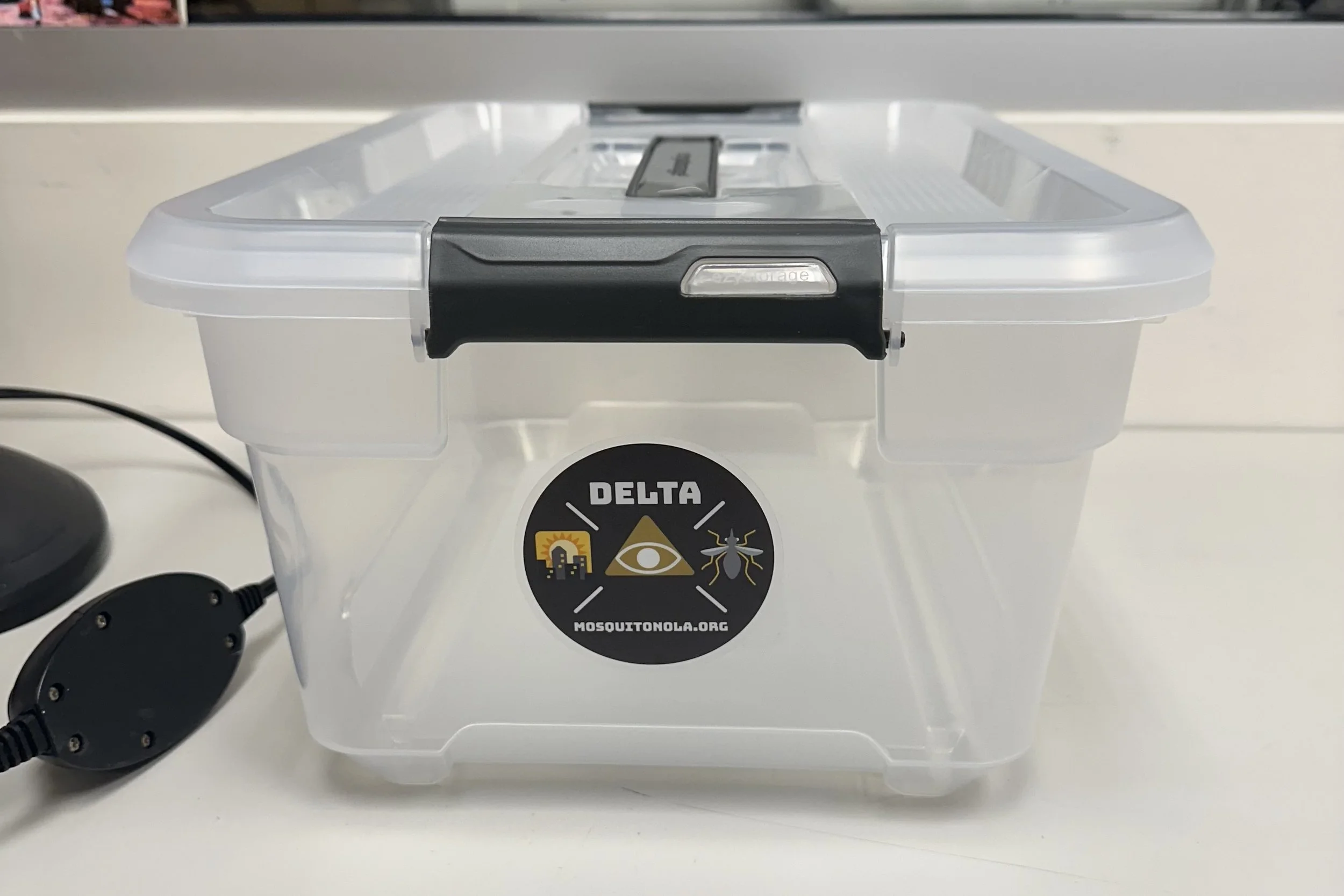
The paper that was removed can then be folded or rolled up and placed into one of the small plastic bags provided, this bag should be brought in and placed into the Delta project plastic tub in the classroom.
On the same day, fill out an online form using this link: https://tulane.co1.qualtrics.com/jfe/form/SV_4YJjHQ9B1EthEMu
One of the questions asks to record the current temperature using the WeatherSTEM stations. This is a link to a map of current stations https://weatherwise.nola.gov/ and this is a link to the station’s data https://orleans.weatherstem.com/ Choose the station closest to where the ovitrap was placed. We are using the WeatherSTEM stations since the New Orleans Health Department uses this data in their research and other weather station data can vary in accuracy.
The form will also ask about the use of AC at home and what temperature it is set to during the day and at night.
Images of the egg papers will be available on a shared drive that your teacher will have access to. You can check to see if there were any eggs and add your counts to the spreadsheet.
If your trap is lost, damaged or missing, replace it, additional supplies are available in your classroom.
At the end of the study period, bring the cup back with your last collection so that it can be reused in future collections. Thank you!
Please reach out with any questions, Dr. Sarah Michaels smichael@tulane.edu
Resources
Mosquito Life Cycle https://www.cdc.gov/mosquitoes/pdfs/aedeslifecycle-p.pdf pl